

Health & Wellness Guide
Dangerous Sleep Habits Seniors Never Notice
Some nightly routines look harmless but can quietly affect health, safety and daytime thinking in later life.
angerous sleep habits seniors never notice often hide inside routines that feel perfectly ordinary, such as a nightly drink, a loud snore, a pill from the pharmacy shelf or a long afternoon nap. Because the problems happen while a person is asleep or build up slowly over years, they can go unrecognized by the people living with them. Health agencies and sleep medicine organizations describe several of these patterns as worth attention in older adults, since they can raise the risk of falls, confusion, heart and blood pressure problems, and poor daytime functioning. This article walks through the most commonly cited habits and explains why each one deserves a closer look.
Snoring and Sleep Apnea in Older Adults
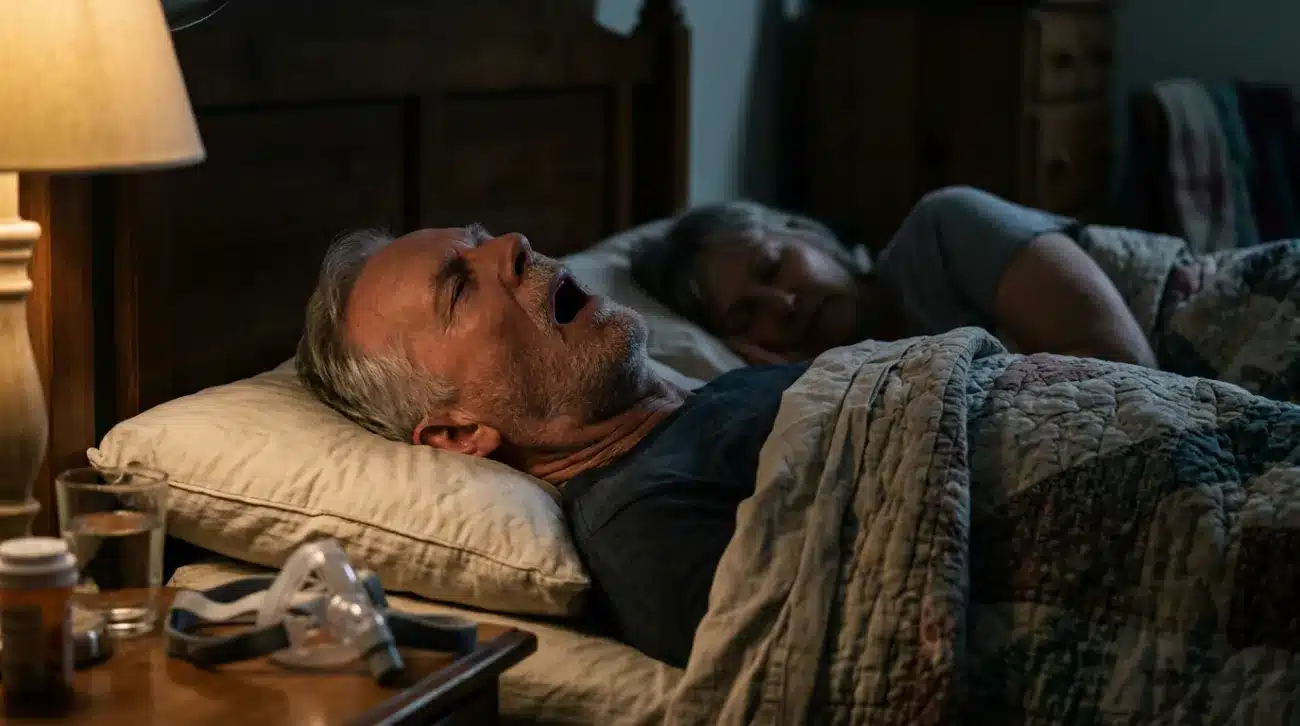
Snoring is often treated as a joke or a minor annoyance, yet it can be a sign of obstructive sleep apnea. In this condition, the airway repeatedly narrows or closes during sleep, which interrupts breathing for short periods. Organizations such as the Mayo Clinic and the National Heart, Lung, and Blood Institute list loud snoring, pauses in breathing noticed by another person, gasping or choking at night, morning headaches and excessive daytime sleepiness among the common signs.
What makes sleep apnea easy to miss is that the person experiencing it is usually asleep when it happens. Many people only learn about it because a spouse or family member mentions the pauses. Untreated sleep apnea has been linked in medical literature to high blood pressure, irregular heart rhythms and an increased risk of stroke, and it can leave people tired even after what seemed like a full night in bed. Diagnosis generally involves a sleep study, either in a laboratory or at home. Treatment options described by medical organizations include continuous positive airway pressure (CPAP) therapy, oral appliances, weight management and, in some cases, surgery.
Context
Sleep needs do not disappear with age. The Centers for Disease Control and Prevention recommends that adults get seven or more hours of sleep per night, and the National Institute on Aging notes that older adults need about the same amount of sleep as younger adults, even though sleep patterns often change.
Sleeping Pills and Over-the-Counter Sleep Aids

When sleep becomes difficult, reaching for a pill can seem like the simplest answer. For older adults, however, several widely used sleep medications carry added risks. The American Geriatrics Society’s Beers Criteria, a well-known guide to potentially inappropriate medications for older adults, generally advises avoiding benzodiazepines and the so-called Z-drugs, such as zolpidem, because of concerns about confusion, falls and fractures. The U.S. Food and Drug Administration has also required boxed warnings on certain prescription sleep medicines, including zolpidem, eszopiclone and zaleplon, about rare but serious complex sleep behaviors such as sleepwalking and sleep driving.
Over-the-counter products deserve the same scrutiny. Many nighttime pain relievers and sleep aids contain diphenhydramine, a first-generation antihistamine with anticholinergic effects. The Beers Criteria advises older adults to avoid it, and side effects can include next-day drowsiness, confusion, dry mouth, constipation and difficulty urinating. Because these products are sold without a prescription, many people assume they are mild. Anyone who has taken a sleep medication for a long time should speak with a doctor or pharmacist before changing the dose or stopping, since some medicines should not be discontinued abruptly.
Alcohol Before Bed

A nightcap is a common habit, and alcohol can make a person feel drowsy at first. Health sources, including the National Institute on Alcohol Abuse and Alcoholism, note that alcohol can disrupt sleep later in the night, leading to more awakenings and lighter, less restorative rest. Alcohol also relaxes the muscles of the throat, which can worsen snoring and sleep apnea in people who are prone to them.
Older adults may be especially affected because the body processes alcohol differently with age, and many commonly prescribed medications can interact with it. Combining alcohol with sedating medicines can increase drowsiness and the chance of a fall. For those who notice that a drink in the evening is followed by restless nights, cutting back on alcohol, particularly in the hours before bed, is a step frequently suggested by sleep specialists.
Napping and Irregular Sleep Schedules

Napping is not harmful in itself, and a short rest can be refreshing. Guidance from the National Institute on Aging and sleep medicine groups generally suggests keeping naps brief and earlier in the day, because long or late naps can make it harder to fall asleep at night. Over time, this can create a cycle in which poor nights lead to long naps and long naps lead to poor nights.
A related habit is going to bed and waking at widely varying times, or spending long stretches in bed awake. Sleep experts typically recommend a consistent schedule, a cool, dark and quiet bedroom, and limiting caffeine later in the day. It is also worth noting that unusually heavy daytime sleepiness is not always a matter of habit. It can reflect an underlying sleep disorder, a medication effect or another health condition. Research linking long naps with health outcomes is largely observational, so it does not prove that naps themselves cause problems.
Why bed partners matter
Several of the conditions described here, including sleep apnea and acting out dreams, are often noticed first by someone else. A spouse, relative or caregiver who has seen breathing pauses, loud snoring or unusual movements can give a doctor useful information that the sleeper cannot provide.
Acting Out Dreams and Restless Legs
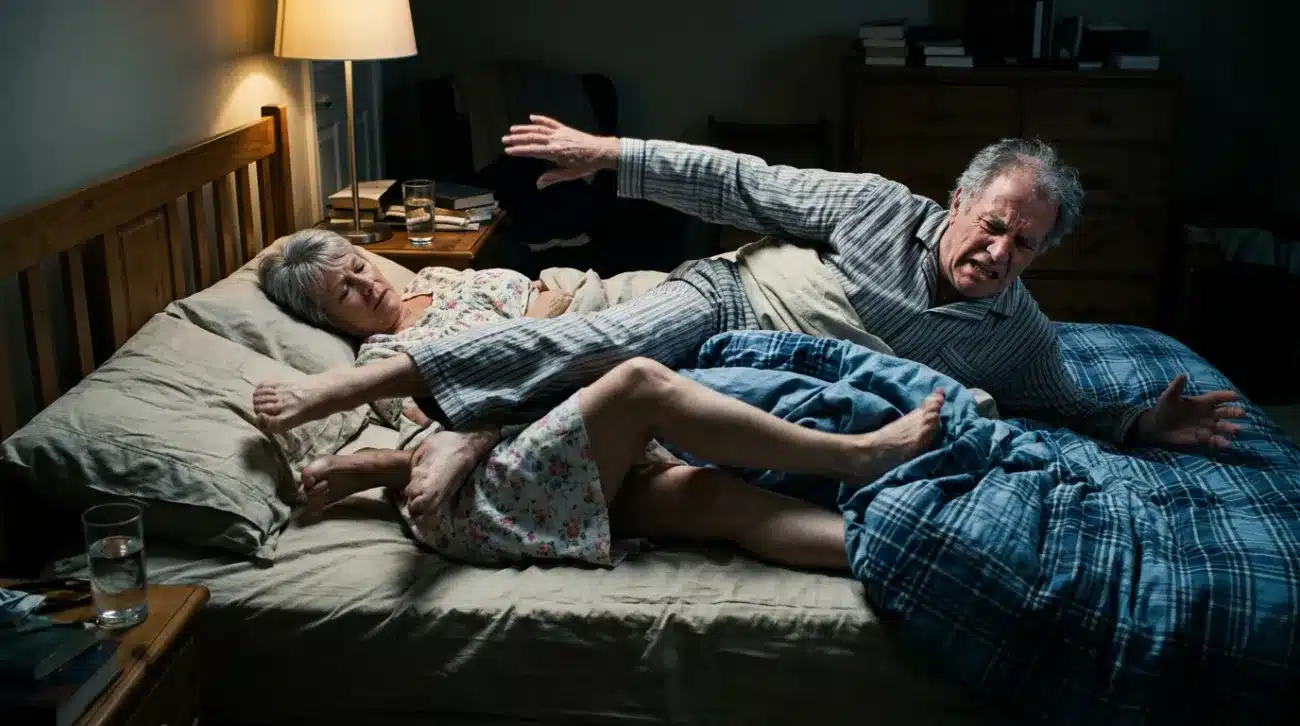
Some sleep behaviors look strange but are easy to dismiss. REM sleep behavior disorder involves physically acting out vivid dreams, which can mean shouting, flailing, punching or kicking during sleep. Mayo Clinic describes it as a condition that typically appears in later life and can lead to injuries to the sleeper or a bed partner. Researchers have also reported that REM sleep behavior disorder can sometimes precede neurodegenerative conditions such as Parkinson’s disease or Lewy body dementia, though not everyone who has it goes on to develop them. This is a reason to raise the symptom with a doctor rather than a reason for alarm.
Restless legs syndrome and related limb movements during sleep can also fragment rest. People with restless legs syndrome describe an urge to move the legs, often in the evening or when lying down, and the movements can interrupt sleep without the person fully waking. Medical sources note that the condition has several possible contributing factors, which is one reason evaluation by a health professional is recommended instead of self-treatment.
Key point: Sleep that is frequently interrupted, noisy, restless or physically active is not simply a quirk of getting older. These patterns can point to conditions that are diagnosable and, in many cases, treatable.