
Bulgarian Split Squat
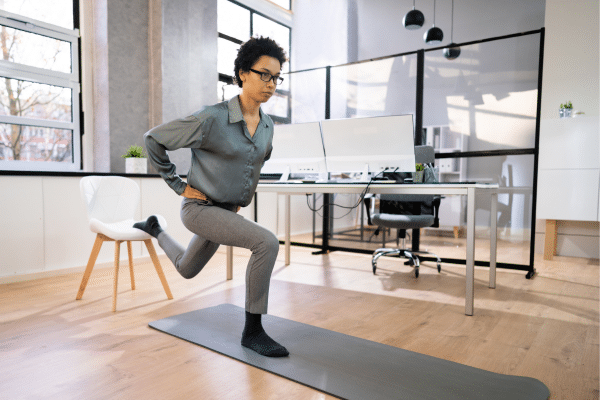
Squats have long been hailed for their capacity to build lower body strength. The Bulgarian split squat, however, takes this exercise to another level by introducing an element of balance and depth. Start by standing a few feet away from a chair, facing away from it. Extend one foot back and place it on the seat of the chair. Lower down into a lunge, ensuring the front knee is in line with the front foot, and then rise back up.
This exercise intensely targets the glutes, hamstrings, and quads. The elevated rear foot increases the range of motion, allowing for a deeper lunge and greater muscle engagement. It’s important to keep the core engaged and chest lifted to maintain balance throughout the movement. With each repetition, not only does lower body strength increase, but so does stability and coordination. It’s an excellent addition to any leg day routine, promising noticeable results in both muscle tone and overall functionality.
Seated Biceps Curl
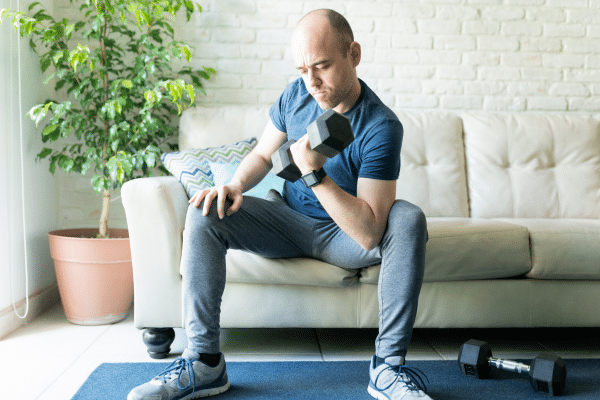
While standing biceps curls are more commonplace, performing them seated has its distinct advantages. Using a chair for support, sit with a straight back and feet firmly planted on the ground. Holding a weight in each hand (this could be a dumbbell, a household item, or even a book), curl the weights towards the shoulders, ensuring only the forearm moves.
One major advantage of the seated variation is the elimination of momentum. Without the ability to sway or use the hips, the biceps are isolated more effectively, leading to more targeted muscle engagement. Furthermore, the seated position ensures better posture, reducing the risk of back strain. With controlled movements and consistent resistance, seated biceps curls can significantly contribute to stronger, more defined arms. Remember to choose a weight that is challenging yet allows for good form throughout the entire set of repetitions.
Seated Tummy Twist

The core is more than just the front abdominal muscles; it encompasses the sides and back as well. The seated tummy twist provides a comprehensive approach to core training. Sit on the edge of a chair with a straight back and feet firmly planted. Hold a weight or household item with both hands in front of the chest. Keeping the hips steady, rotate the upper body to one side, then the other, focusing on engaging the oblique muscles.
This rotation-based movement challenges the oblique muscles, those responsible for lateral flexion and rotation of the trunk. The controlled twisting action not only tones these muscles but also improves flexibility in the spine. To get the most from this exercise, it’s essential to ensure the rotation comes from the waist and not the shoulders. Over time, consistently including the seated tummy twist in a workout routine can result in a stronger, more flexible, and better-defined midsection.
The Bottom Line
The versatility of a chair in fitness routines is truly remarkable. Far from being just an item of relaxation or work, it offers an array of exercise possibilities for strengthening, toning, and flexibility. From targeting leg muscles to enhancing core stability, these exercises demonstrate that effective workouts don’t always require specialized gym equipment. By incorporating these movements into a regular routine, one can enjoy the convenience, challenge, and results that come with chair-based exercises. Whether at home, in the office, or even while traveling, a chair can be a trusted companion in the pursuit of physical fitness.