
There’s no doubt that life can be quite stressful from time to time, leaving you feeling overwhelmed, exhausted, and overwhelmed. But it doesn’t have to stay like this! Stress is manageable with the right attitude and tools – including one of the simplest forms of self-care you often forget about: stretching and De-Stress.
Everyone thinks about stretching primarily to improve flexibility, but did you know that regular stretches can also help reduce stress levels? This article will show how and why easy stretches are great for relieving tension caused by everyday stressors so that you can put your best foot forward every day. Let’s get started!
Why It’s Important To De-Stress

De-stressing is an essential part of any and every individual’s life as it helps to promote mental and physical health. Without some sort of stress management outlet, people can easily be overwhelmed with everyday life’s challenges. Taking time to de-stress can help ease worry, relieve anxiety, and reduce tension, allowing a person to better cope with the stressful challenges they face while helping to reduce feelings of loneliness or isolation and finding healthier ways to handle emotions.
De-Stress With These Stretches
Seated Spinal Twist
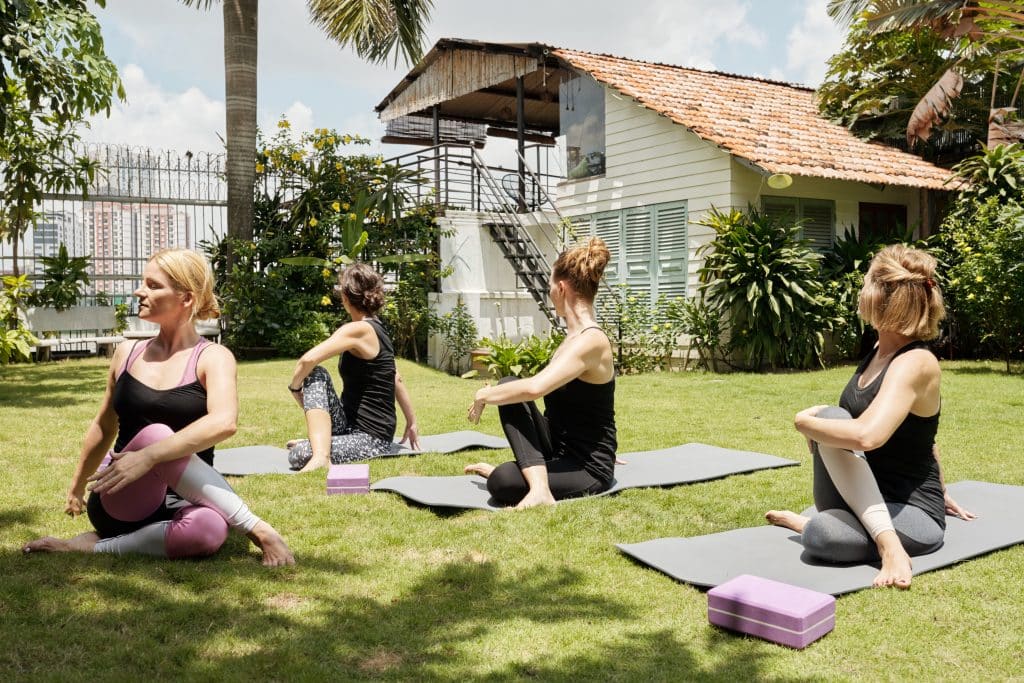
Doing the Seated Spinal Twist is an effective way to help increase mobility and flexibility in your spine, core muscles, and hip joints. To do this move correctly, start sitting with both feet flat on the floor as close to your hips as possible. Your knees should be bent at a 90-degree angle while gently pressing themselves outward.
Grab your nearest knee firmly with both hands and slowly rotate it away from your chest while supporting any additional movement with the opposite hand pushing against your thigh. If you don’t feel muscle tension, gently tilt further away from your body until you feel a nice stretch across your ribs. Hold for 10-15 seconds before repeating on the other side (using alternate hands). Doing this move regularly will help free up energy blockages that can cause pain or discomfort in different areas of your body.
Child’s Pose
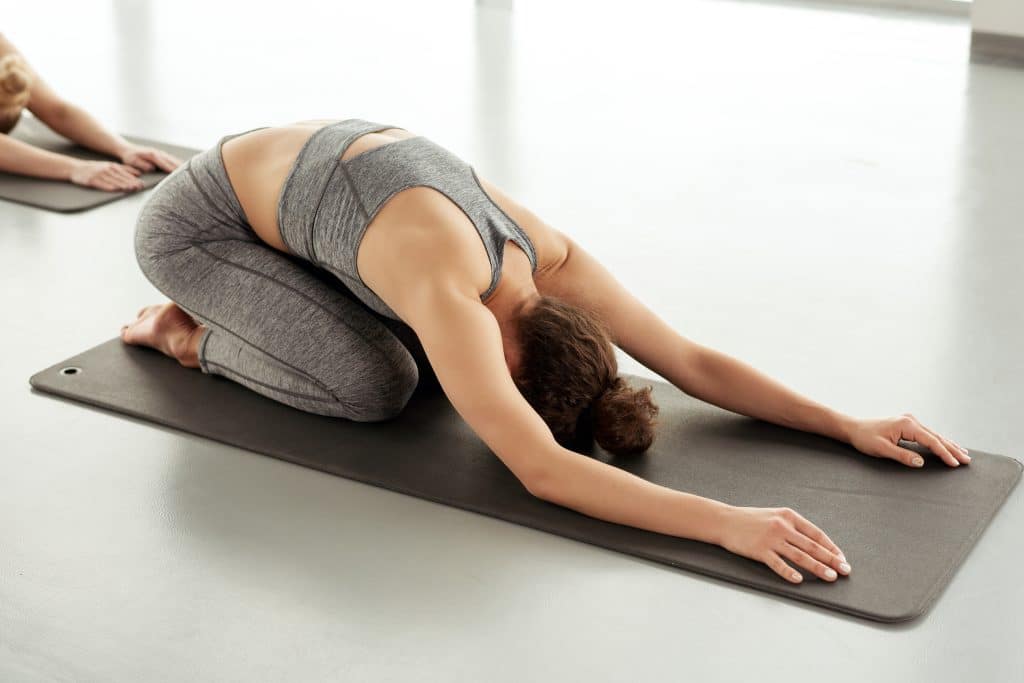
The Child’s Pose is a yoga asana that helps to relax your entire body and calm your mind. To perform this, start by kneeling on the floor and separate your feet hip-width apart while keeping your toes touching. Next, until the buttocks touches the heels of your feet, move slowly onto your knees and bring them together. Afterward, lower your torso between your thighs in such a way that your stomach is resting upon the tops of your thighs, and it needs to be parallel with the ground.
Expand and elongate every muscle in both front-facing legs until you are positioned comfortably with your palms lying face down on each side of you. Let go of any tension in this pose and rest, allowing yourself to sink with great care into the energy released from the pose. To end, come up slowly when you are ready until you once again sit upright on both knees, maintaining proper posture.
Downward Facing Dog
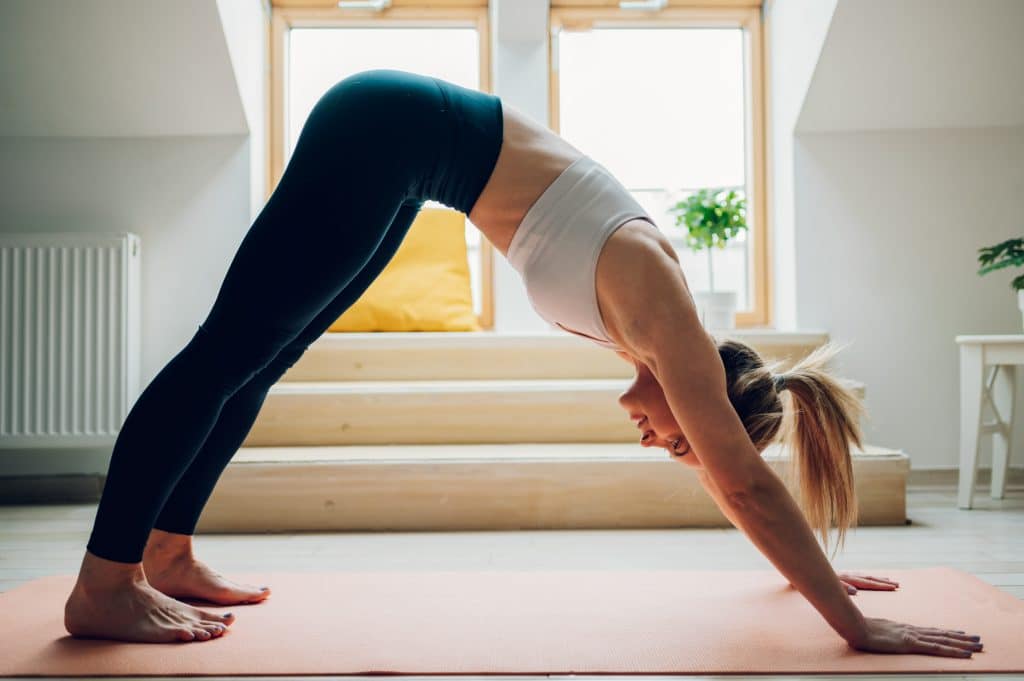
Doing the Downward Facing Dog is one of the most popular yoga postures. This invigorating stretch works for every muscle group and helps promote relaxation while also building strength. To do the Downward Facing Dog, start on your hands and knees with your spine in a neutral position. Lift your knees off the ground, pushing back as you exhale until you’re in an inverted ‘V’ pose.
Spread your fingers wide and press down through your palms for stability. Align your head between your two arms with your gaze slightly forward or downwards towards the navel. Take a few deep breaths, engaging the muscles of your glutes, legs, core, and arms as you hold the pose for 45-90 seconds before returning to starting position. With practice, this posture can help improve posture, ease stress, freshen energy levels, and even aid digestion!
Standing Hip Flexor Stretch
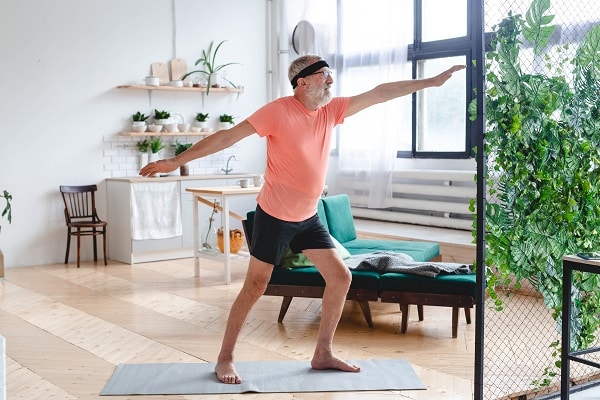
Doing a standing hip flexor stretch is an excellent way to release tension in your hips and buttocks. To do it, start by standing with the feet shoulder-width apart and the arms at your side. Keeping one leg stationary, step forward with the other leg and bend the knee until a stretch is felt in the hip area of that leg.
Make sure you keep your shoulders, chest, and back straight while pushing the pelvis forward. Hold this position for 10-20 seconds while breathing deeply to maximize relaxation throughout the hips, then switch legs and repeat. This simple stretch routine should go a long way in helping to reduce fatigue and improve flexibility in this crucial muscle group.